
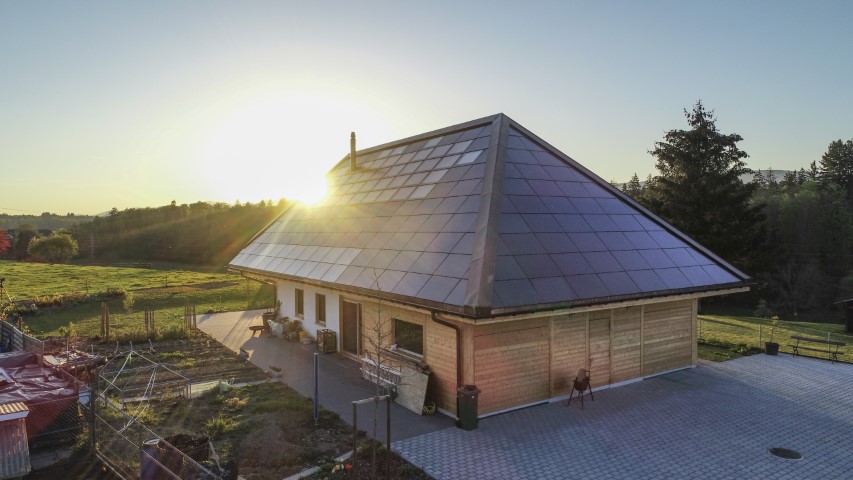
The SEAMLESS-PV project represents a strategic pivot in the global energy transition, moving beyond the traditional constraints of standard solar panels toward a future where energy generation is an inherent property of the built environment. While Building-Integrated Photovoltaics (BIPV) represent the most established IPV application, their development continues to evolve.
Building on this foundation, the project also addresses emerging and fast-growing sectors such as transport, infrastructure and agriculture.. By transforming vehicles, roads, and greenhouses into active power plants, SEAMLESS-PV seeks to eliminate the distinction between a functional surface and an energy generator. This article provides an overview of the work conducted by Tecnalia R&I and SUPSI to definestandards for the mass deployment of IPV products.
Foundation and Design
The work carried out in SEAMLESS-PV on the standardisation of IPV products is documented in Deliverable D6.5, which establishes the technical framework supporting the development and qualification of innovative IPV solutions. The report identifies regulatory gaps, defines product-specific qualification strategies and aligns technical development with the safety, performance and aesthetic requirements of the targeted application sectors..
Building upon the conceptual frameworks established in previous work, this phase translates the identified requirements into preliminary product designs for the four target sectors: Building, Infrastructure, Vehicle and Agri-PV. Rather than developing technologies in isolation, the project considers technical performance, regulatory compliance, manufacturability and architectural integration from the outset. This integrated approach provides the basis for prototype manufacturing, qualification testing and demonstration activities required to achieve Technology Readiness Level (TRL) 6/7.
From prototype to compliance: the testing framework
To bridge the gap between innovation and commercial adoption, SEAMLESS-PV utilizes a dual testing framework. This strategy is a commercial necessity: while indoor testing is required for regulatory compliance and the legal right to sell a product, outdoor testing provides the “bankability” and proof of long-term ROI that investors and end-users demand.
The following table outlines the primary regulatory frameworks mandated for IPV market entry:
| APPLICATION SECTOR | MAIN REGULATORY FRAMEWORK | PRIMARY OBJECTIVE |
| Building Integrated PV (BIPV) | Construction Products Regulation (CPR), Low Voltage Directive, EN 50583 | Structural safety, fire performance, electrical safety and building integration |
| Infrastructure Integrated PV (IIPV/PVNB) | CPR, sector-specific infrastructure standards, LVD | Mechanical integrity, electrical safety and infrastructure performance |
| Vehicle Integrated PV (VIPV) | UNECE regulations (e.g. R43), automotive safety standards | Passenger safety, glazing performance and vehicle integration |
| AgriPV | Agricultural regulations + LVD + construction standards (where applicable) | Electrical safety, agricultural functionality and structural performance |

Energy Box by P. Bonomo Contractors: Ciemme, Itallegno, Ennebi [More info]
Prototype Innovations and Engineering Specifications
The testing phase is tailored to specific prototype innovations, ensuring they meet sector-specific performance targets:
- Coloured Films & Modules: Developed by ONYX and CSEM, these focus on high-aesthetic ventilated façades. Testing prioritizes wrinkle prevention in interlayers and visual uniformity. A primary target is achieving a fire reaction classification of Class B, s2-d0.
- Adaptable BIPV (3S): These modules utilize high-efficiency G12 cells and Kromatix technology for anti-glare façade integration. To ensure structural compatibility with façade loads, the modules feature a specific construction with 4mm front and 4mm back glass, resulting in a total thickness of 9 mm.
- Roofing Shingles: Utilizing a “one-shot” Resin Transfer Moulding (RTM) process, these lightweight composite shingles (measuring 600x700mm with a 2mm thickness) enable curved transitions. A key safety target is the Broof (t1) classification for external fire exposure.
By subjecting these prototypes to both accelerated aging (indoor) and real-world integration (outdoor), SEAMLESS-PV builds the “customer confidence” essential for the successful deployment of large-scale demonstration pilots.
[Download D6.7]

Kita Wundernasa by Comamala Ismail Architectes [More info]
Real-world validation: performance monitoring
Outdoor performance monitoring under non-laboratory conditions is a key step in demonstrating the readiness of IPV technologies and advancing them toward TRL 6 and TRL 7.While laboratory tests provide standardized metrics, outdoor monitoring evaluates how prototypes behave when exposed to the variable spectral, thermal and meteorological conditions encountered in real applications. The monitoring setup employs a side-by-side comparison in which a conventional benchmark module and an innovative integrated module are installed under identical conditions. This comparison is essential for evaluating the performance implications of architectural and aesthetic design choices. For example, colored interlayers and other integration features may alter the spectral response and optical behavior at high angles of incidence; monitoring angle-of-incidence effects and low-irradiance performance helps identify possible yield penalties associated with these design solutions.
To assess the behavior of the prototypes under realistic operating conditions, high-resolution meteorological and operational data are collected, including:
- Irradiance: Tracking Diffuse Horizontal Irradiance (DHI), Global Horizontal Irradiance (GHI), and Albedo to understand the impact of reflected and scattered light on integrated surfaces.
- Temperature: measuring ambient and module temperatures to investigate thermal behavior and the effects of mounting configurations and ventilation.Humidity: assessing the response of encapsulation materials and edge seals under varying environmental conditions.
Monitoring campaigns extending over several months enable the evaluation of the expected performance of the technologies in real-world environments and help identify possible operational issues requiring further refinement. The resulting data provide empirical evidence of energy yield, functional performance, and reliability, supporting the demonstration of IPV technologies in relevant environments and paving the way toward their validation in operational environments and eventual large-scale deployment.
The Path to Market Deployment
The successful deployment of Integrated Photovoltaics requires the combination of product development, qualification testing and standardisation. Within SEAMLESS-PV, preliminary product development is complemented by comprehensive indoor validation, long-term outdoor monitoring and the continuous assessment of regulatory requirements. Together, these activities provide the technical evidence required to demonstrate product reliability, safety and suitability for real-world applications.
By integrating advanced manufacturing, prototype validation and standardisation activities, SEAMLESS-PV establishes a coherent pathway towards Technology Readiness Level (TRL) 6/7 and supports the future market uptake of innovative IPV solutions across the building, infrastructure, transport and agricultural sectors.