
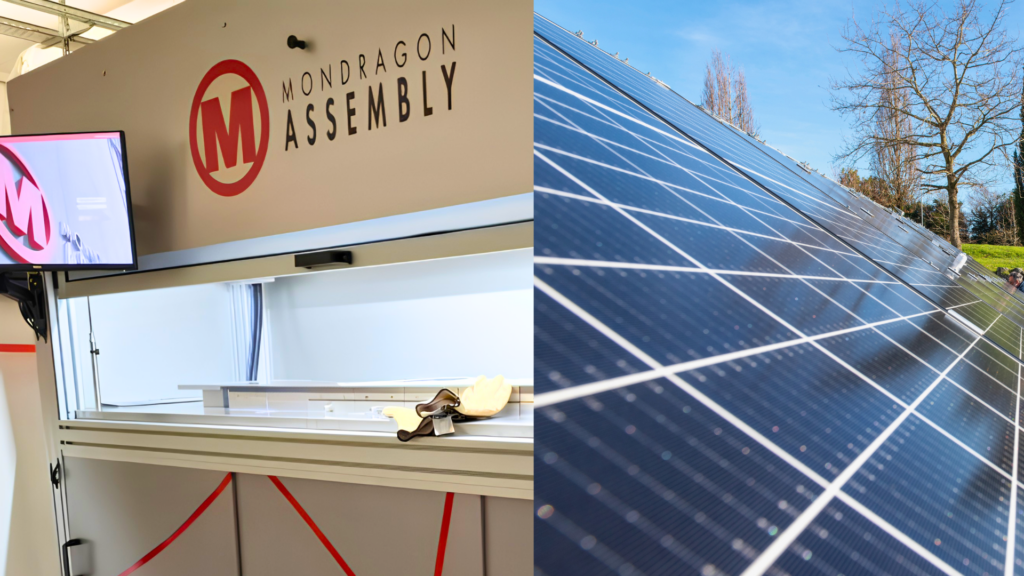
Making Integrated-PV real
While Integrated Photovoltaics (IPV) have demonstrated significant impact in building-integrated applications, their expansion into broader industrial sectors has historically been stifled by rigid manufacturing limitations. To date, the industry has struggled to balance the need for bespoke, adaptable solar solutions with the requirement for cost-effective mass production. The EU-funded SEAMLESS-PV project was launched to bridge this strategic gap, developing revolutionary manufacturing tools and multifunctional PV products designed for effortless integration across diverse sectors.
This initiative represents a significant evolution in technology, building upon the foundational expertise established in previous endeavors like the BIPVBoost project. As the technical lead behind the equipment developments discussed here, Mondragon Assembly (MASS) is engineering the flexible, automated hardware necessary to transition from standard PV production to high-efficiency, custom manufacturing. These developments are not merely conceptual; they are functioning prototypes ready for industry validation.
The following sections explore four critical technological breakthroughs achieved by MASS to make seamless, custom IPV a commercial reality.
Redefining Cell Interconnection: The Flexible Tabber-Stringer
In traditional solar manufacturing, the pursuit of volume often results in a lack of versatility. For bespoke IPV, cell interconnection is a major bottleneck, as architectural and automotive designs require irregular spacing and specialized cell architectures. MASS has addressed this through the development of a next-generation flexible tabber-stringer that marks a strategic shift toward manufacturing adaptability.
Two Modes of Operation
The core value proposition of this equipment lies in its dual operating modes, which allow manufacturers to pivot between high-throughput efficiency and extreme customization:
- Standard Mode: Optimized for traditional, high-efficiency production using constant cell distances.
- BIPV Mode: This is the primary “So What?” factor. In this mode, the machine handles variable distances between cells ranging from 2mm to 200mm. This flexibility is essential for creating the transparency levels and specific geometric patterns demanded by modern building designs.
Technical Architecture
The machine’s precision is underpinned by a sophisticated technical framework:
- M10 Compatible Cell Feeder: Engineered to handle the upcoming generation of large-format mono and polycrystalline cells, including both full and half-cell configurations.
- Camera-Based Position Control: High-accuracy alignment is maintained via advanced vision systems, ensuring reliability even when dealing with non-standard spacing.
- Innovative Ribbon Dispenser-Placer: This system utilizes a specialized mechanism to accommodate the varying ribbon lengths required for fluctuating cell distances.

The tabber-stringer built at Mondragon Assembly
Specialized Variation for Zebra Technology
MASS has further extended this technology to accommodate high-efficiency Zebra M6 half cells. This variation replaces traditional soldering with Electrically Conductive Adhesive (ECA) bonding. From a strategic aesthetic perspective, this process is fully compatible with black ribbon technology, allowing for the “all-black” seamless appearance required for premium architectural facades.
Once these flexible strings are produced, they must be integrated into larger circuits through sophisticated, automated bussing.
Precision at Scale: Automated Bussing Equipment
The strategic importance of automated bussing cannot be overstated. By automating the interconnection of strings, MASS reduces the reliance on manual labor (a traditional source of defects and high costs in bespoke manufacturing) and significantly increases the reliability of flexible IPV modules. This equipment was defined through a high-level collaboration between MASS, the research institute CSEM, and the company 3S, who serves as the machine’s end-user and a leading manufacturer of solar panels for the BIPV market.
The machine’s architecture is focused on precision handling of flexible substrates:
- Cross-connector Preparation Station: Acts as the preparer of the module’s “connective tissue,” precisely readying the conductive elements that bridge individual strings.
- Induction Soldering: MASS selected induction soldering to ensure high-quality, localized joints. This method is ideal for the sensitive, flexible materials used in IPV, as it prevents thermal stress on surrounding components.
- Cross-connector Gripper and Working Tray: These components facilitate the automated handling and placement of connectors, ensuring the internal circuit is perfectly formed before moving to the next stage of assembly.
With the electrical layout finalized, the module must then be prepared for its final protective layers.
The bridge to durability: The pre-lamination machine
The pre-lamination phase serves as a vital strategic checkpoint in the manufacturing workflow. Before a panel undergoes the irreversible process of final sealing, all internal components—the cells, ribbons, and interconnects—must be stabilized.

The pre-lamination machine
The pre-lamination machine ensures that these elements are perfectly aligned and secured. In the context of flexible IPV, where components are often non-standard and prone to shifting, this machine prevents internal displacement. By maintaining structural and electrical integrity at this stage, MASS ensures the final product meets the durability requirements of harsh exterior environments. This process is the critical link between internal circuitry and a finished, weather-resistant product.
Mastering Complexity: Stacking and Lamination for Curved VIPV
If building integration is the current industry milestone, Vehicle-Integrated Photovoltaics (VIPV) represents the final frontier of complexity. Integrating solar into the aerodynamic curves of car roofs or hoods requires moving beyond flat surfaces into 3D geometries.
The automated stacking and lamination of curved VIPV panels is the equipment designed to master this challenge. It completes the “seamless” manufacturing chain, providing the automated capability to transform a flat solar cell into a complex, integrated 3D component. By solving the geometric stresses associated with curved lamination, MASS allows the automotive industry to integrate high-efficiency power generation into vehicle designs without compromising on aesthetics or performance.
A New Era for Integrated Solar
The four technological breakthroughs developed by Mondragon Assembly (MASS) represent a comprehensive solution to the industry’s “customization vs. cost-effectiveness” dilemma. By delivering high-readiness tools for variable spacing, ECA bonding, automated bussing, and 3D lamination, MASS has created a manufacturing toolkit that enables the PV industry to move beyond standard rectangular panels.
The long-term impact of these tools is profound: they empower the transition toward truly adaptable, multifunctional energy solutions where every building facade and vehicle surface becomes an active power source. As the SEAMLESS-PV project progresses toward its conclusion, stay tuned for the results of upcoming pilot validations that will demonstrate these tools in high-stakes, real-world manufacturing environments.
Read more
Result summary #7 Innovative and flexible Tabber-Stringer machines